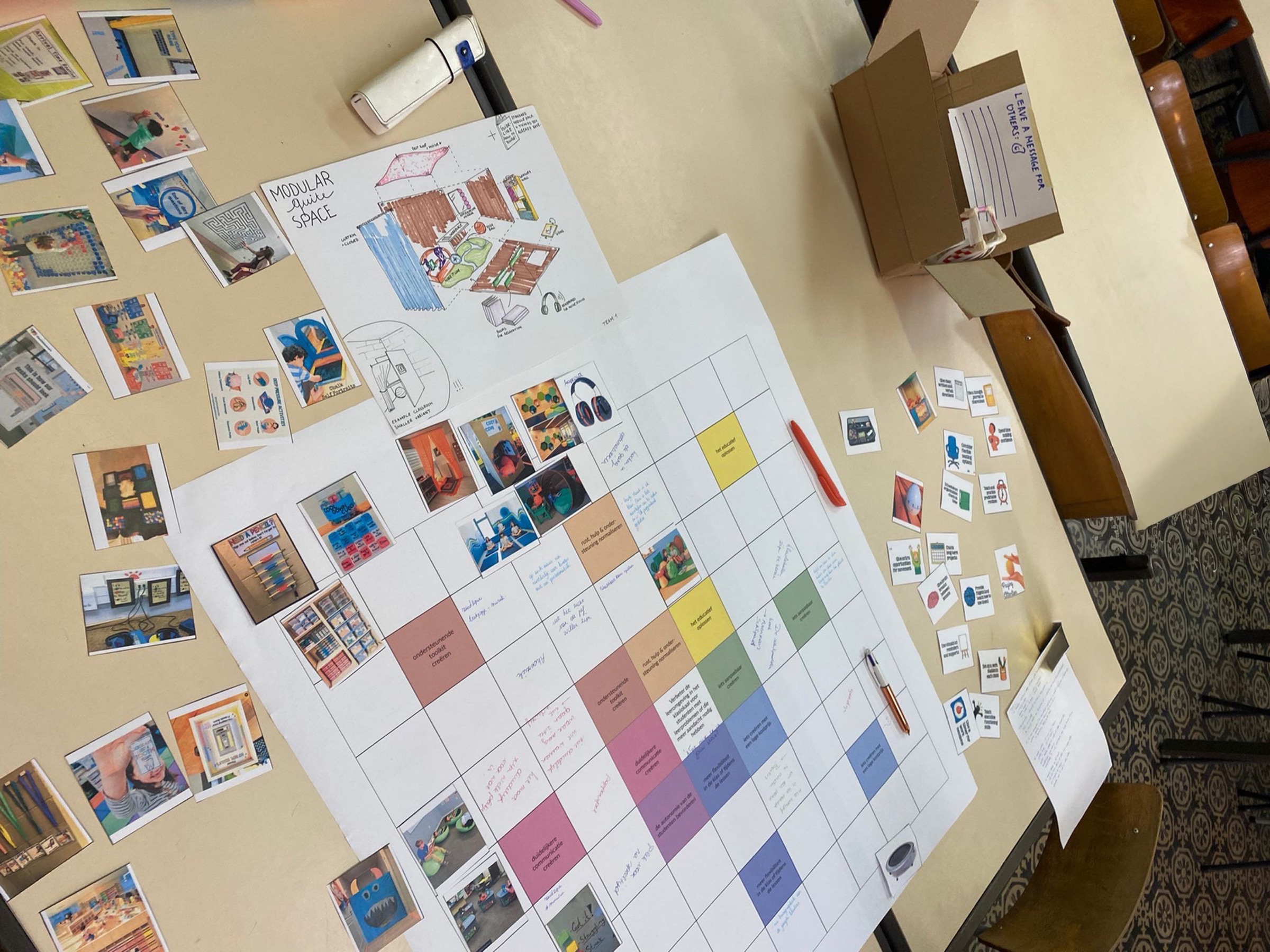
Managing stimuli for young learners
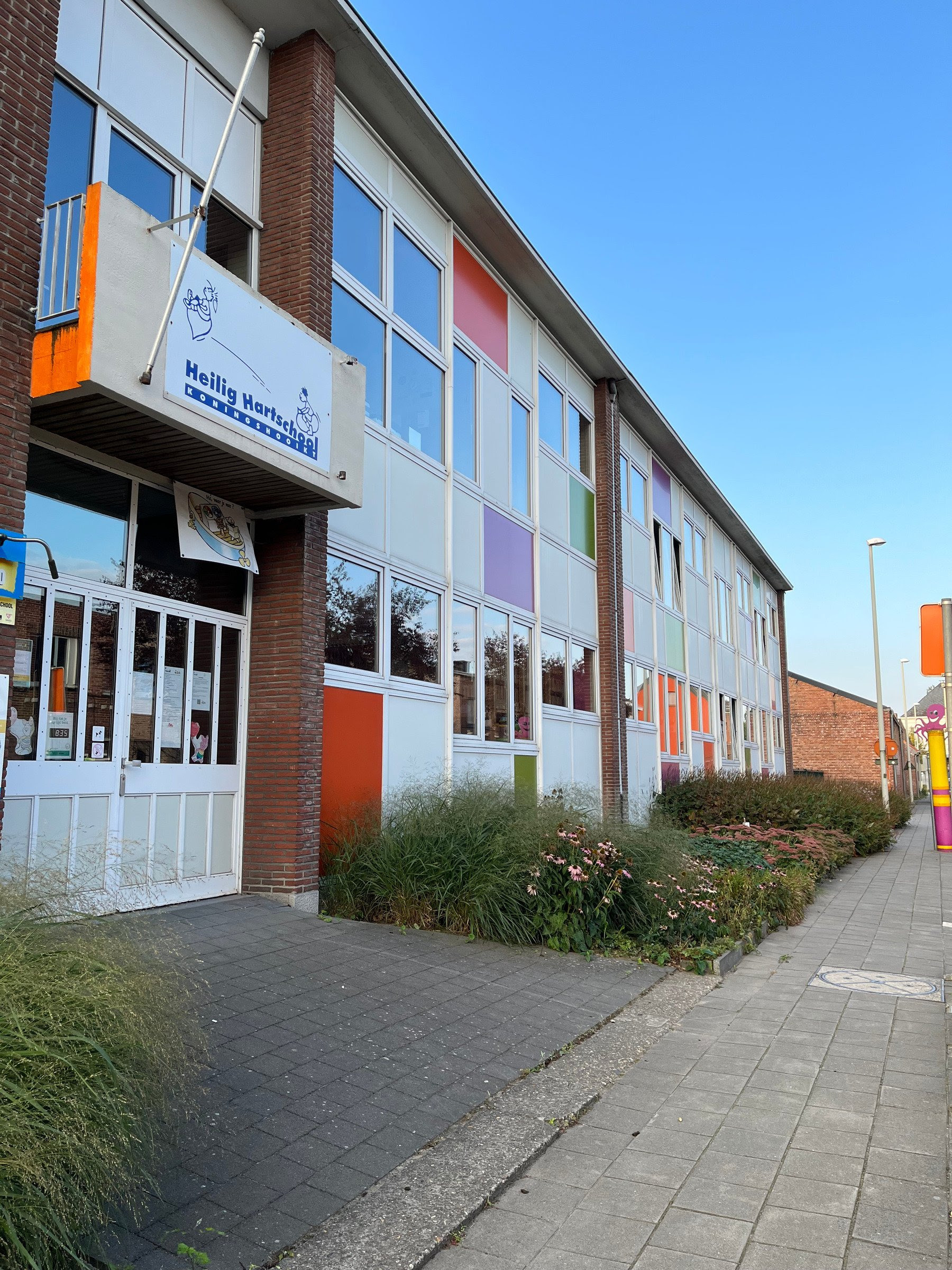
Heilig Hartschool Koningshooikt is an elementary school in Lier, Belgium, struggling to create an inclusive environment where students of all abilities can thrive.
Their classrooms and overall setup were not equipped to support learners effectively, despite initial interventions to help students cope with stimuli. Els, the school director, emphasised their vision of a school that champions self-guided learning and embraces emotional sensitivity, where students of diverse abilities and backgrounds can thrive in mainstream classrooms.
Our project focused on redesigning the learning spaces to better address focus and attention challenges, enhancing the daily experience for all students.
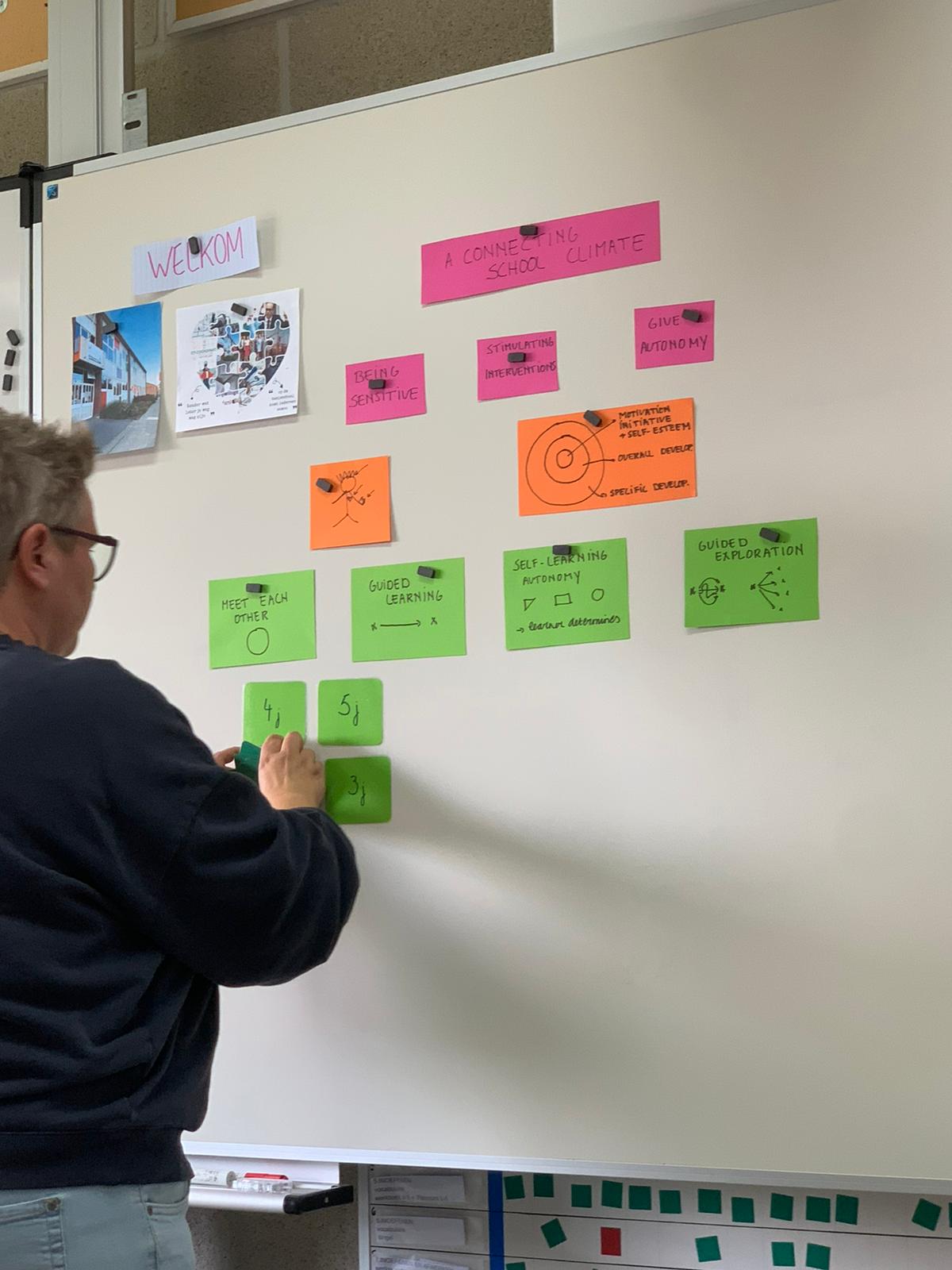
- Led primary research: conducting staff interviews and facilitating co-creation workshops.
- Framed the design principles and established criteria to guide spatial design decisions.
- Responsible for the content writing and visual design for the final implementation toolkit.
Working within a team of 4, comprising interior and visual specialists, this project was developed as part of my postgraduate programme in Service Design at Thomas More.
How do teachers support students with focus and attention challenges, and what gaps exist in the current setup?
Our objective was to examine how teachers support students with learning and attention challenges and adapt to evolving behaviours across grades, as well as understand how rest is generally integrated into daily routines.
Observations and interviews revealed overstimulating classrooms, a lack of dedicated rest areas, and lack of transparency on strategies employed by teachers, resulting in uneven support for students. While tools like headphones and felt dividers were available to help students manage stimuli, accessing them sporadically in class often stirred up disruptions. Additionally, existing designated corners that could function as rest or focus spots felt bleak or even punitive.
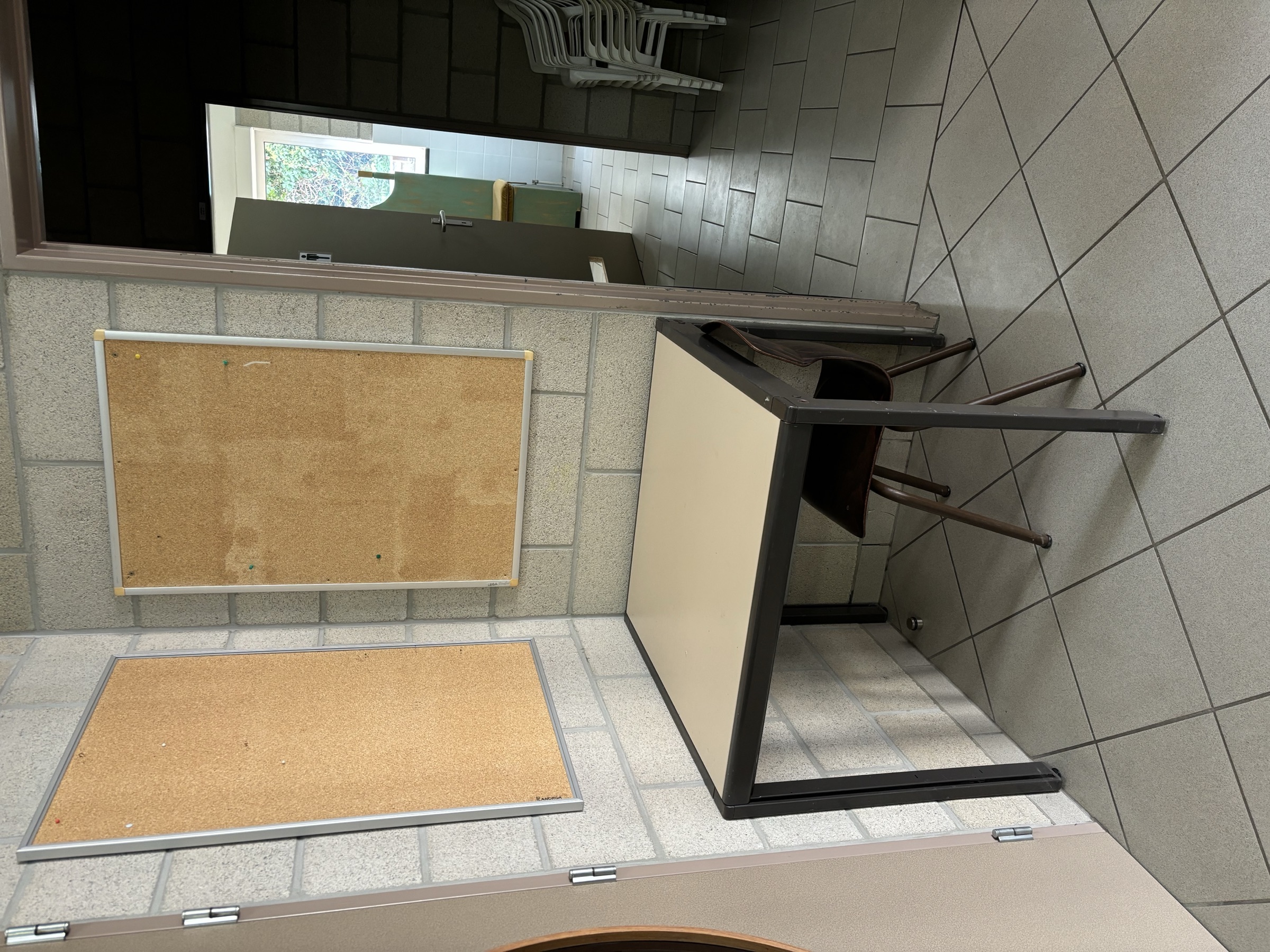
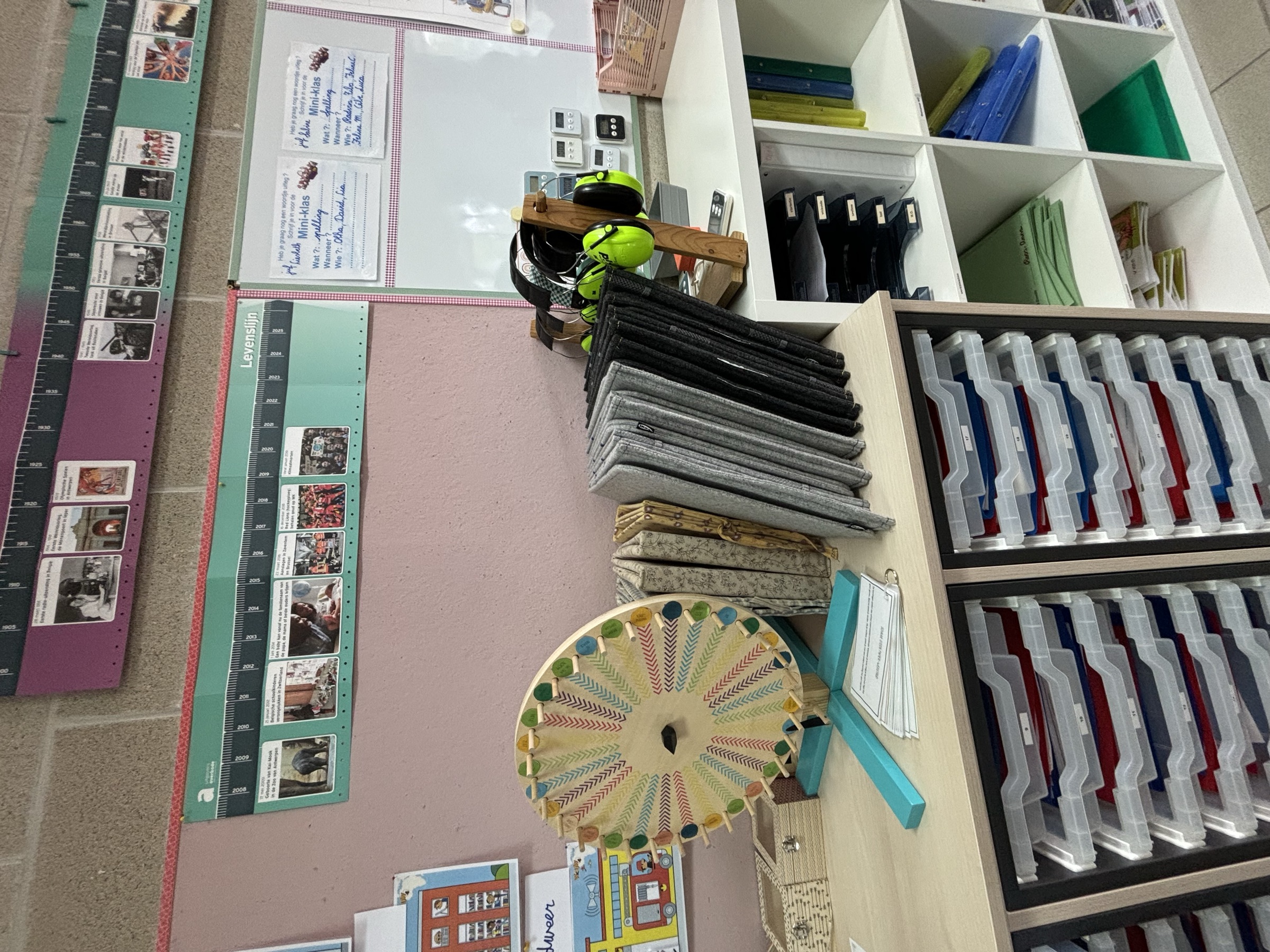
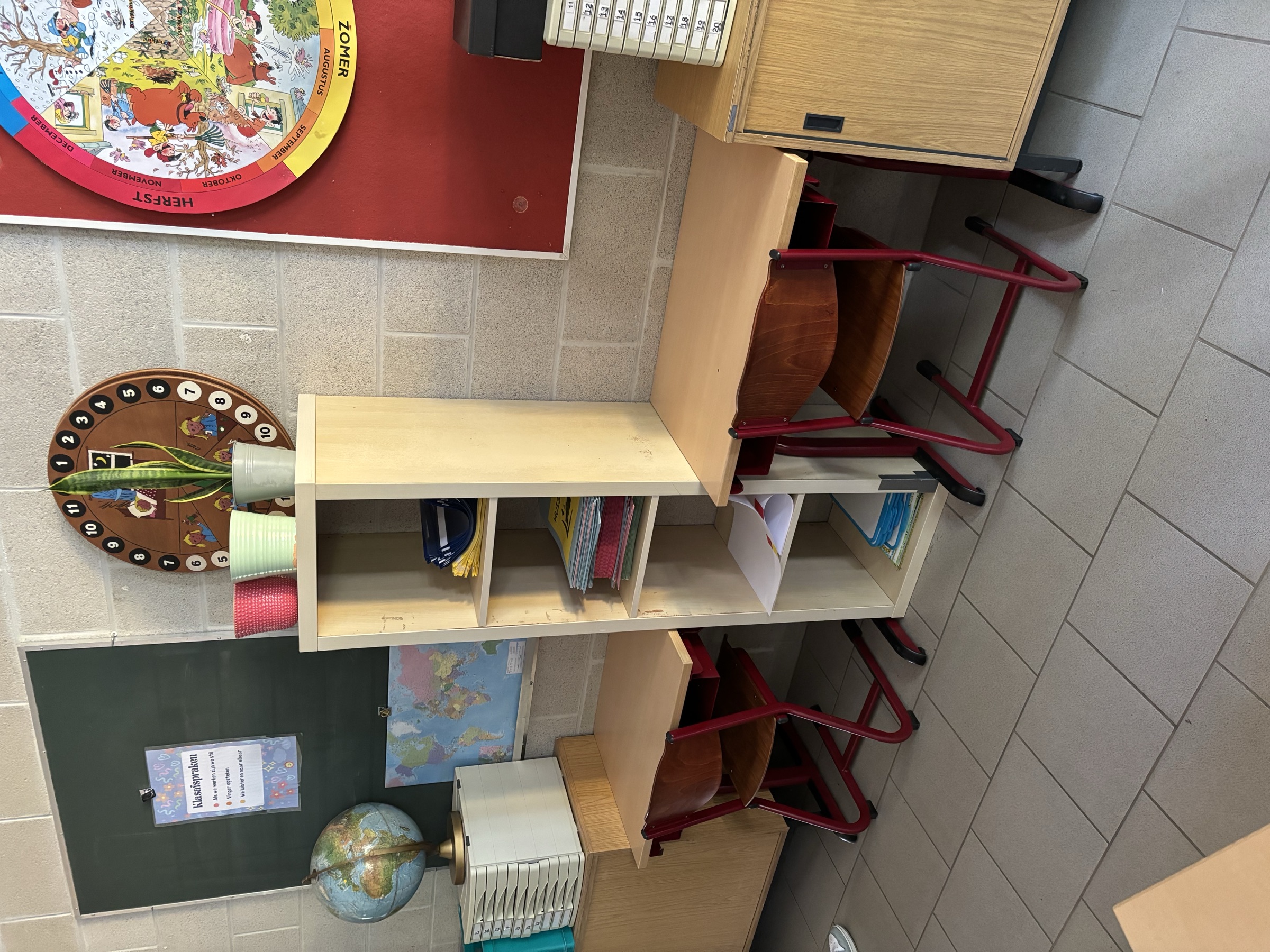
Visualising students' experiences when overstimulated
Journey mapping highlighted younger students' reluctance to ask for help, to the extent of using toilet breaks as a means to escape the classroom. This underscored the need for clear support pathways that reduce stigma around rest and encourage students to reach out, making these elements essential for effective self-regulation.
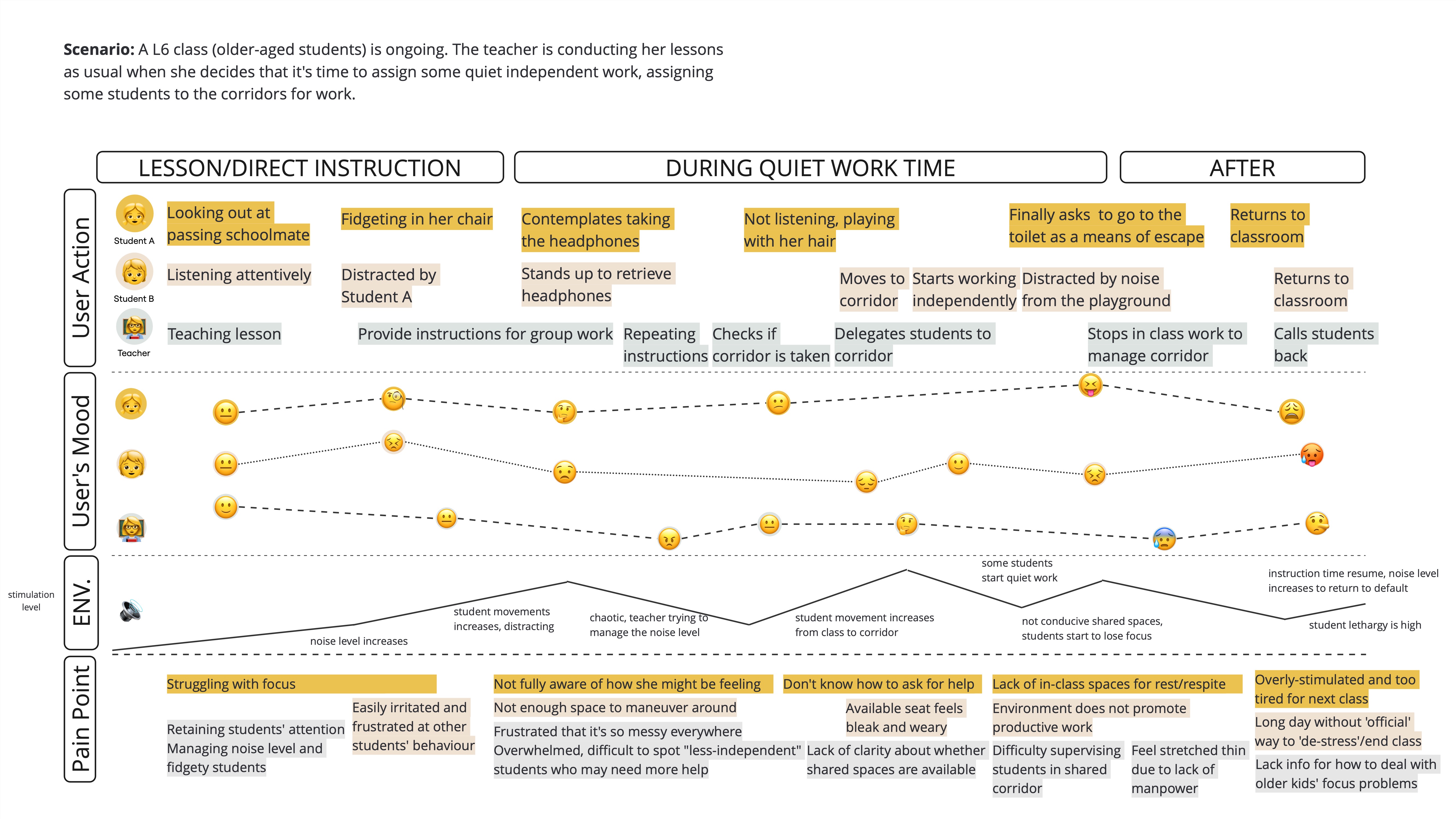
Even a quick journey map was revealing: it showed how students without typical attention issues are just as often pulled off-task by those who do struggle, making this a classroom-wide challenge, not just an individual one.
From these insights, we established key design mandates to guide our solution, emphasising three core principles to address the varied needs of students:
-
Adaptability
Different ages have different needs to prioritise. Spatially, this meant making the most of small, existing spaces while ensuring they could be easily reconfigured as those needs evolved. -
Normalisation
Using support tools should feel routine, not remedial. Reducing stigma around rest and regulation is essential for students to feel safe enough to self-advocate. -
Autonomy
Students need clear, simple pathways to access support independently, building confidence in managing their own learning needs over time.
…transform the learning environment to enhance autonomy and empowerment, allowing students to self-regulate their learning needs?
Involving teachers across grades to tailor interventions
Gaining staff perspectives challenged our initial focus on classroom rest spots. Previous research highlighted concerns about shared spaces due to unclear governance and limited communication between teachers. However, teachers had their own supervision strategies, such as tracking student independence through a "circle of responsibility" and adjusting permissions accordingly.
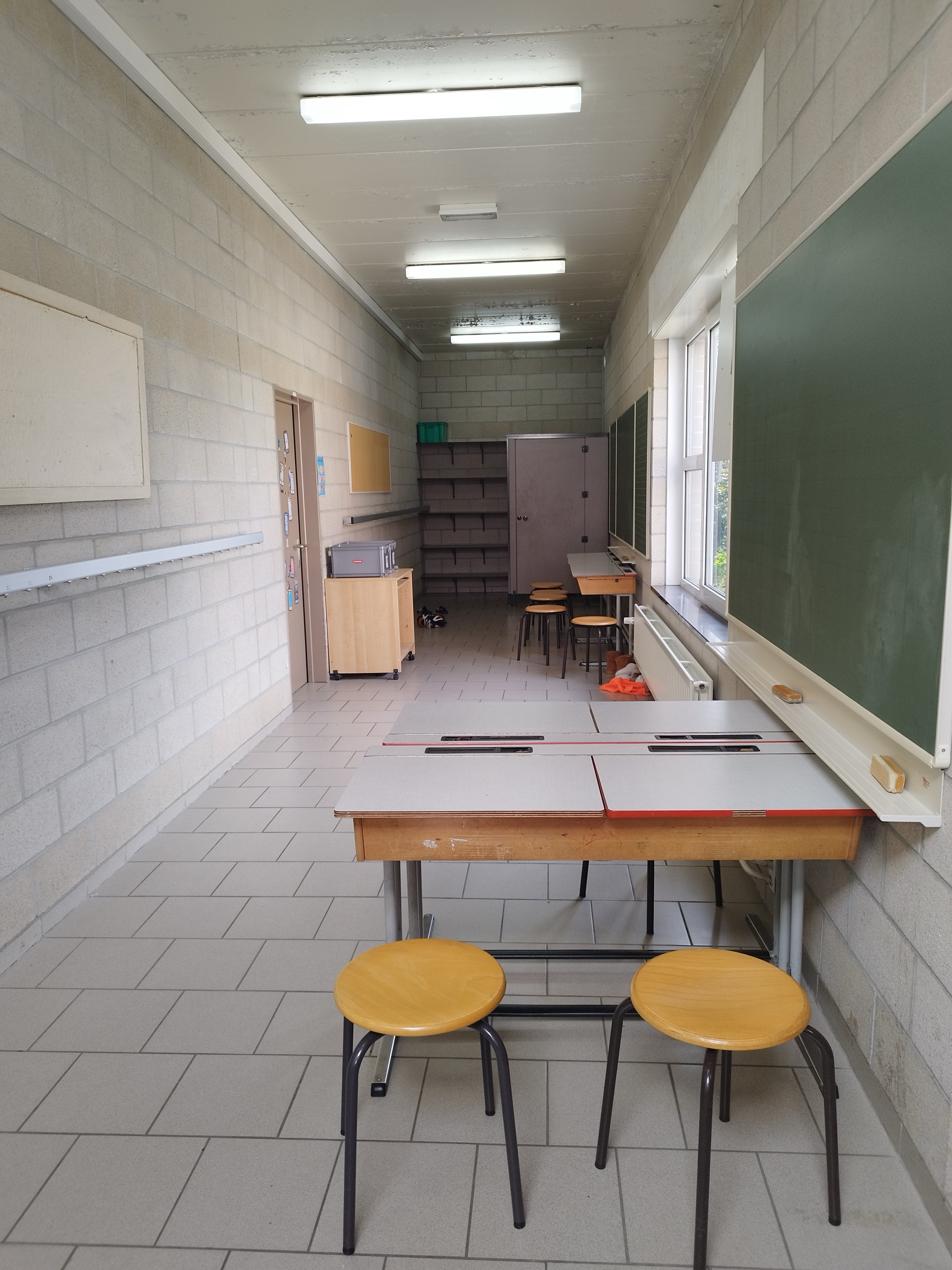
Teachers were also well adept at using informal methods like peeking outside the door. This insight gave us confidence and flexibility in exploring interventions beyond the classrooms, opening up the hallway as a viable design space.
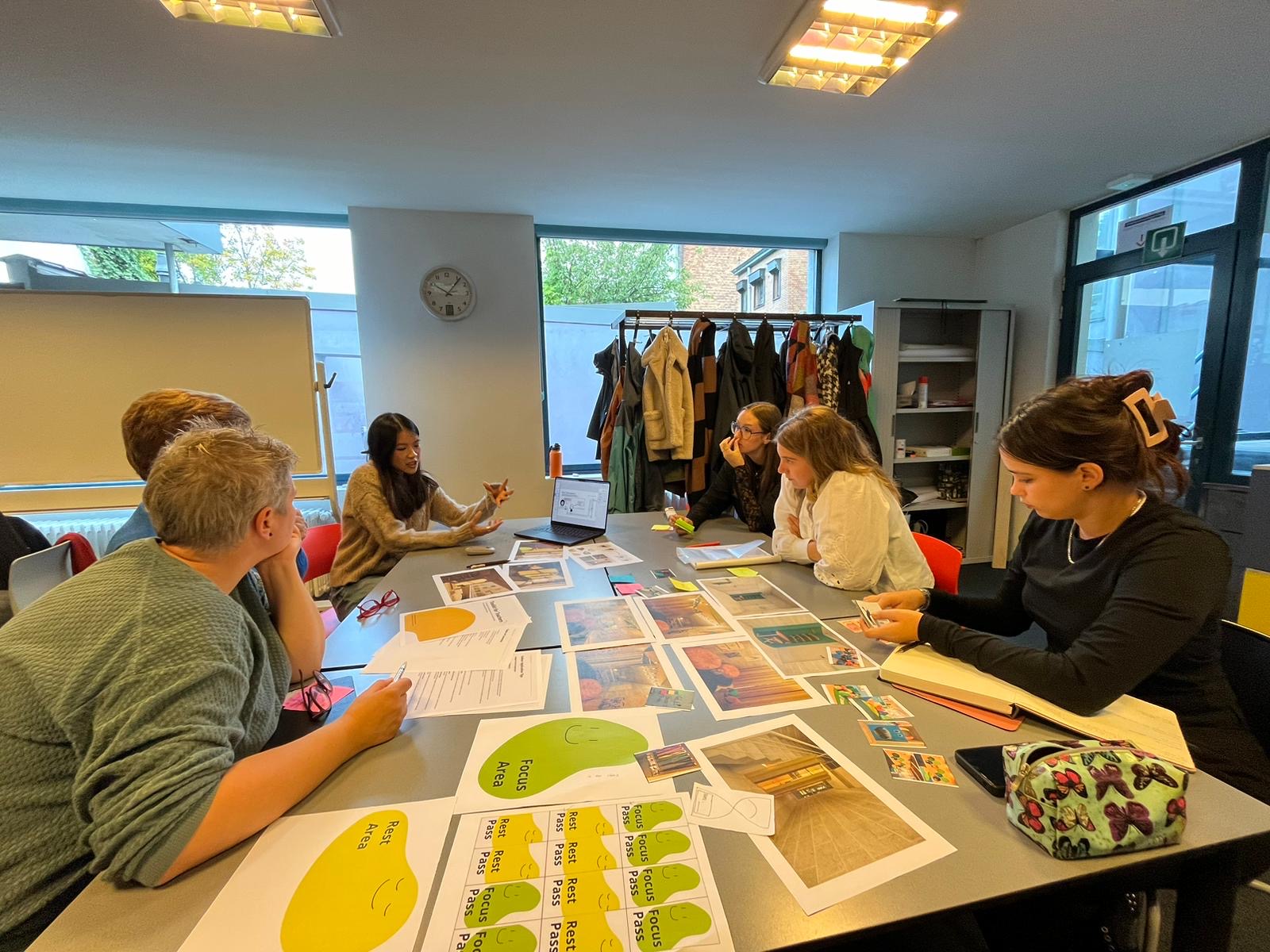
Visualising future scenarios
Our initial focus on designing restorative spaces (quiet areas where students can simply go to rest) evolved through further discussion. It became clear that students' needs varied significantly by age.
For older students, the priority shifted to group work spaces, as they were better equipped to self-regulate through methods like taking walks or self-reporting. We widened our scope to also enable access to spaces that supported peer collaboration, resulting in three distinct zone types:
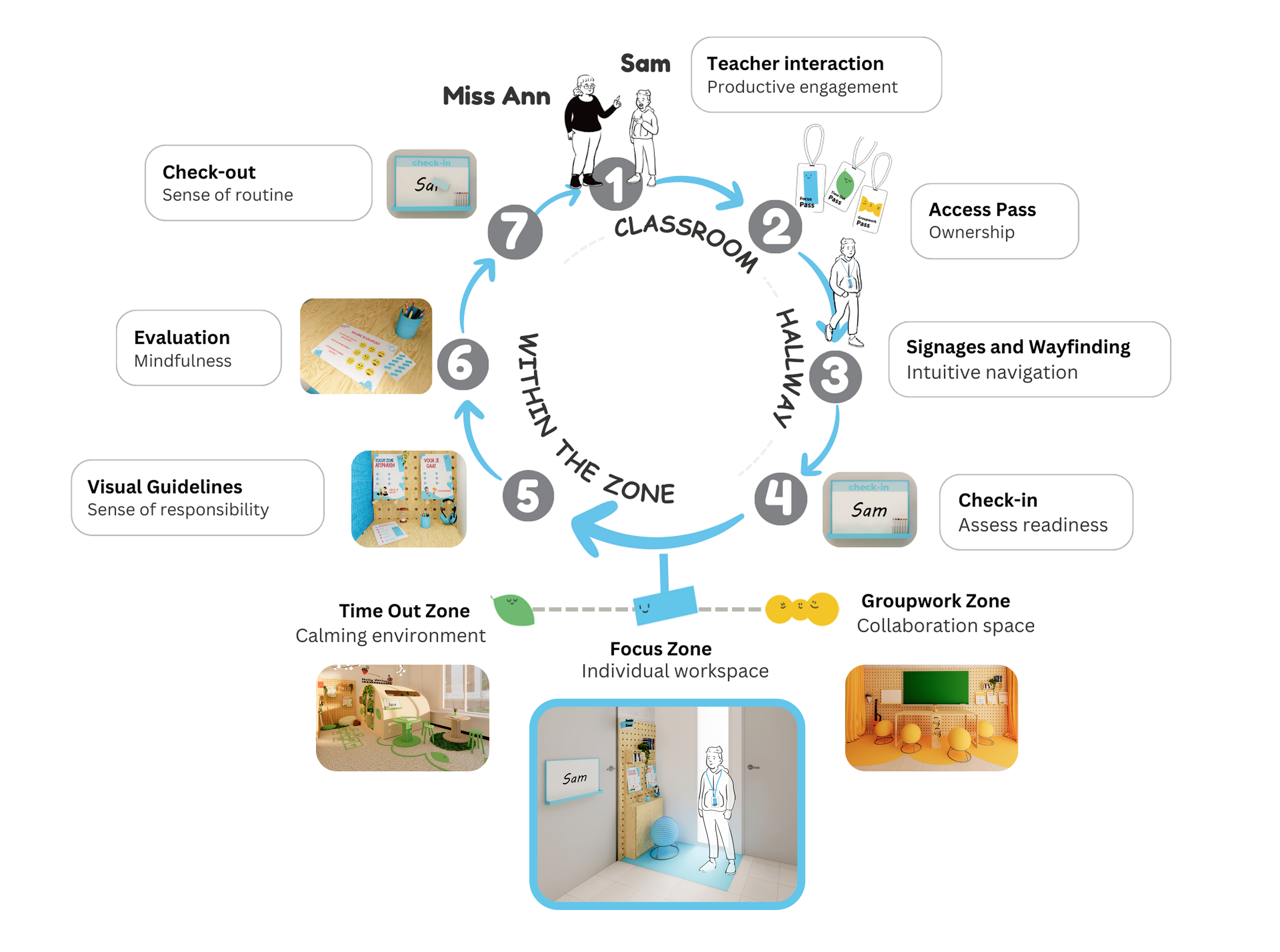
- Time Out Zone: a calming environment to relax and recalibrate.
- Focus Zone: a distraction-free individual workspace for enhanced concentration.
- Groupwork Zone: an energetic environment for collaboration, creativity, and dynamic interactions.
From there, we continued working with teachers to iterate on how students would actually access these spaces, making sure our proposal respected existing classroom habits (like using timers for breaks) and what teachers were already comfortable with.
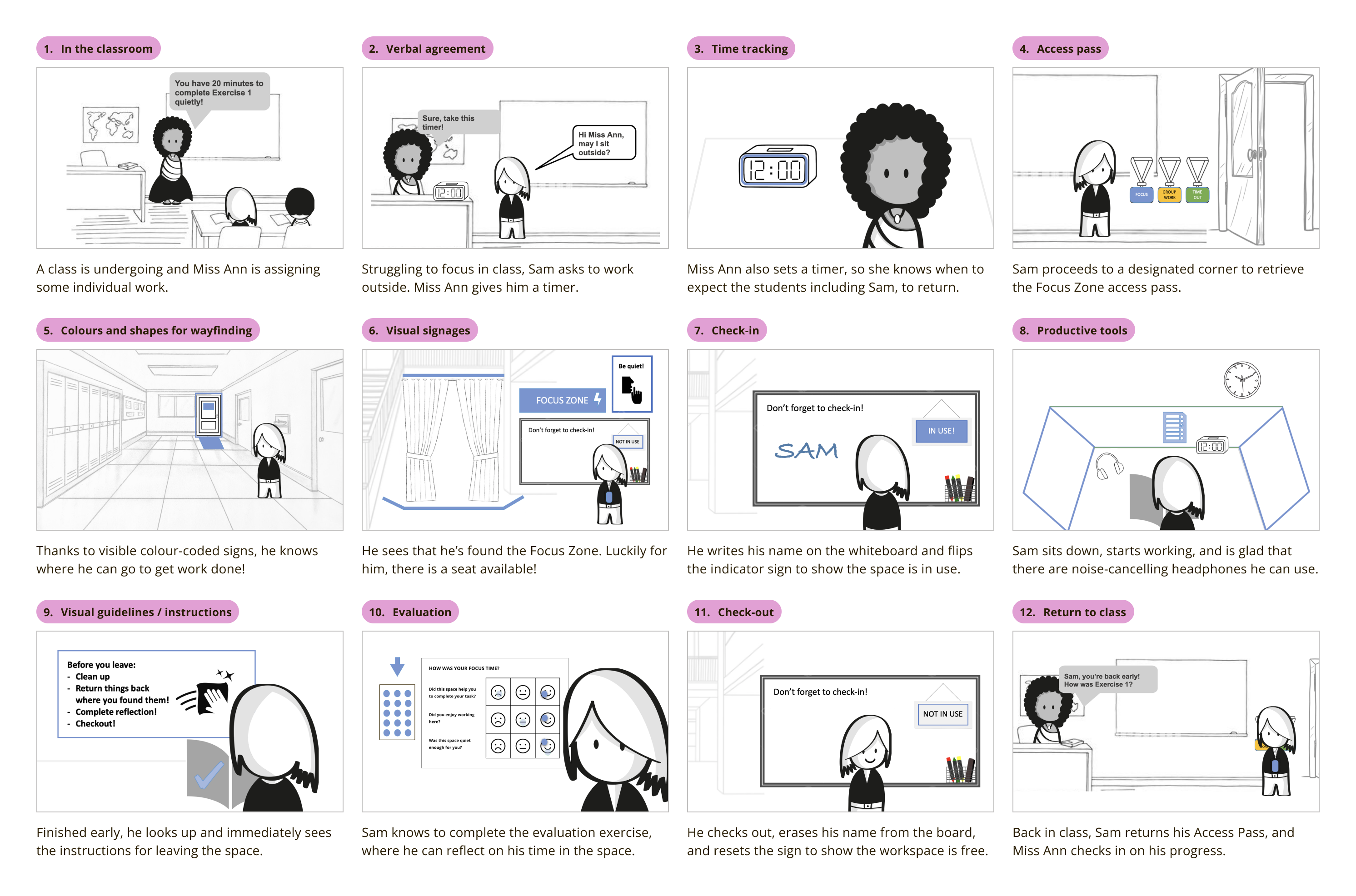
Orchestrating service elements that foster mindfulness, ownership and responsibility
Governing the system is a combination of colour-coding and shape-based principles to enhance navigation and accessibility. This intuitive approach ensures each space is easily recognisable and helps all students develop a shared understanding of each zone's purpose and function (blue squares for Focus, green curves for Time Out, and yellow circles for Groupwork).
The series of touchpoints were designed to guide students seamlessly: retrieving an access pass, navigating zones via signage, and checking in and out. Clear visual guidelines set behaviour expectations, while evaluation prompts help teachers monitor usage and effectiveness.
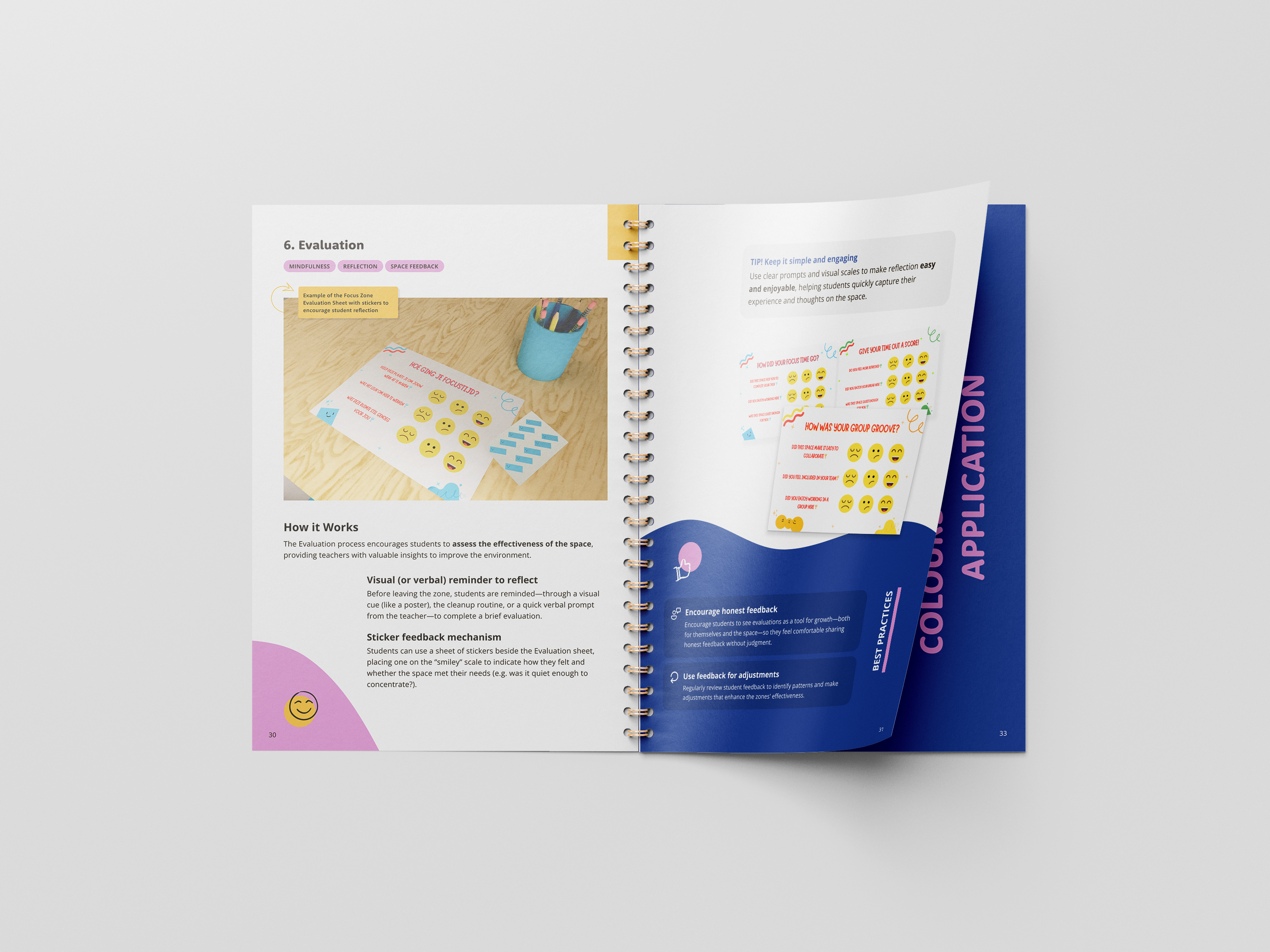
A practical toolkit to support implementation, and the teachers behind it
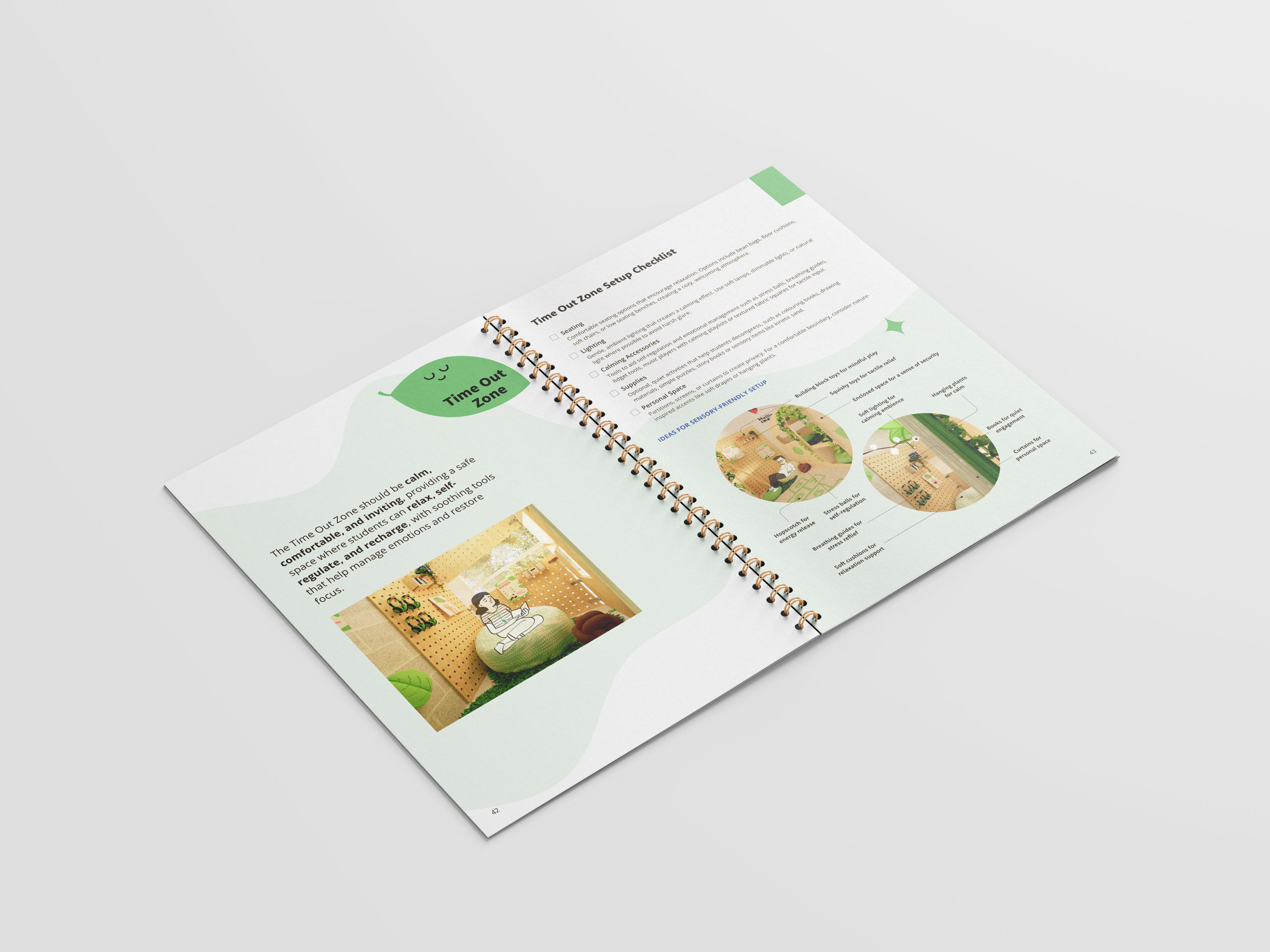
To support implementation at Heilig Hart, we developed a practical toolkit with setup checklists, customisable templates, and best practices. Designed for flexibility, it also includes budget-friendly tips and ideas for creating scaled-down classroom versions of the spaces.
The toolkit provides specifications on key service components. One notable example is how students check into the Time Out Zone. Early validation with teachers showed the need to support alternative rest strategies (such as movement breaks or walks) while still maintaining awareness of students' whereabouts. We proposed a simple check-in board adaptation, letting students easily indicate their location, whether in the zone itself or in common areas like the playground. This balanced teacher visibility with self-directed regulation, while aligning with routines already embedded in daily practice.
Listen to the subject matter experts
If there's one thing I learned from this project, it was exactly that. Involving staff early in the design process made it clear that teachers have their own tricks up their sleeves when it comes to teaching styles, and it pays dividends to respect their routines and design in light of that, not despite it.
Understanding attention deficits (regardless of severity) means involving the right subject matter experts. While our contact with students was sporadic at best, we were lucky to lean on the astute insights of the dedicated care teacher. Time constraints meant we didn't get to pilot this service and test it directly with end-users, but incorporating feedback mechanisms into our proposal was a way to bridge that gap. As a designer, being resourceful and making the most of what you have is an underrated skill.